ERA
Early Church and Epistles
30 AD
Coming of the Holy Spirit and church formation: Acts 2:1-4; justification by faith: Romans 8:28, 5:1
Key Passages
Filter by Place
Acts
Acts
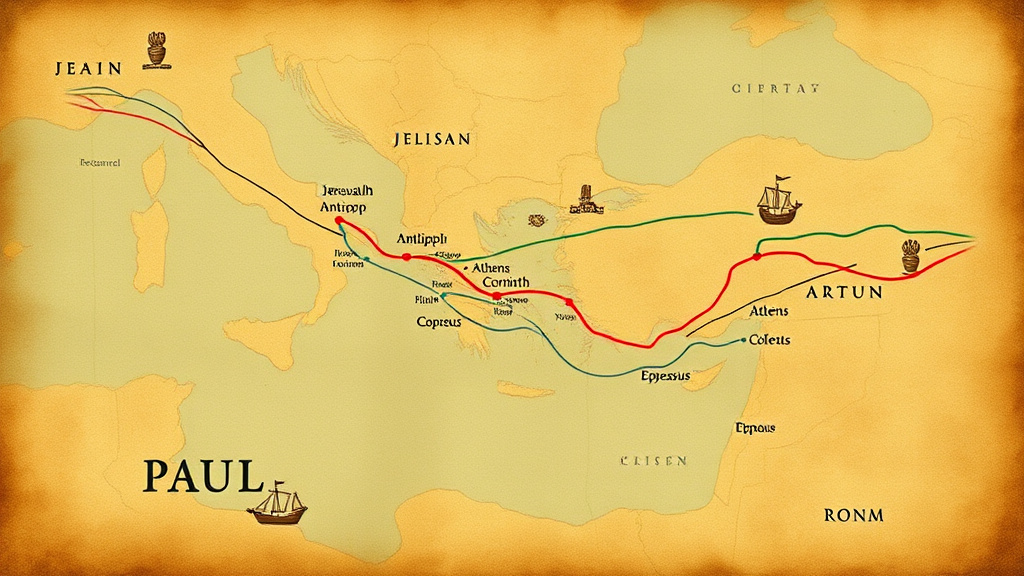
Paul's Three Missionary Journeys
Colossians 2:7
protestant「rooted and builded up in him, and established in your faith, even as ye were taught, abounding in thanksgiving.」
Eternal God
catholicThe living and everlasting God, the object of Tobit's praise, emphasizing God's eternity and sovereignty.
Does Ephesians 2:8-9’s “grace through faith” exclude any role for works in salvation?
How can grace be both freely given and require response?
Acts
Acts
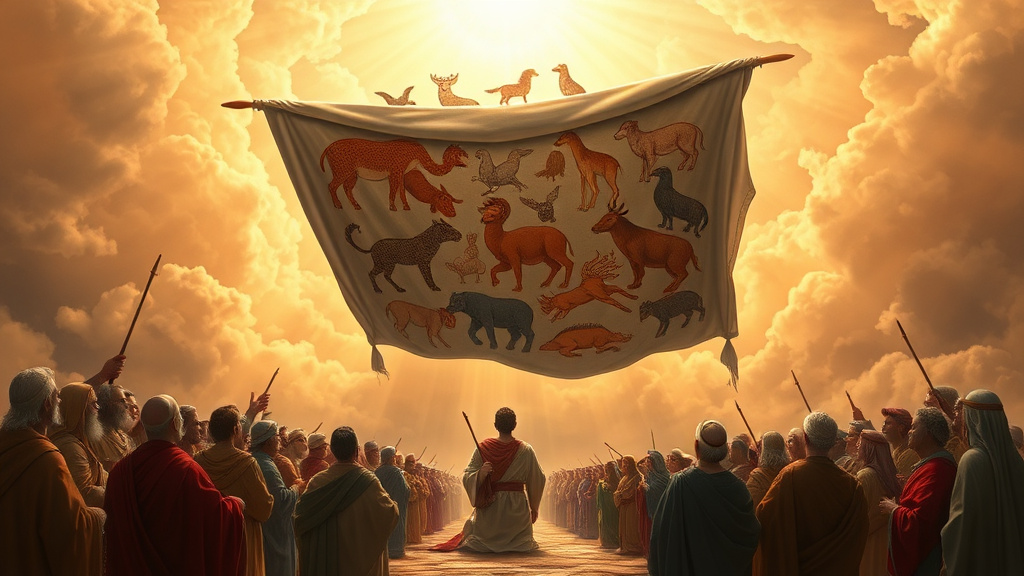
The Gentile Inclusion: God's Expanding Family
2 Thessalonians 1:5
protestant「which is a manifest token of the righteous judgment of God; to the end that ye may be counted worthy of the kingdom of God, for which ye also suffer:」
Gifts
allSpiritual gifts given by the ascended Christ to the church for building up the body.
How does justification by faith differ from works?
Paul's teaching on justification by faith in Romans
2 Timothy 4:10
protestant「for Demas forsook me, having loved this present world, and went to Thessalonica; Crescens to Galatia, Titus to Dalmatia.」
Promise
allThe divine promise given to Abraham and the patriarchs, forming the basis of the life of faith and pointing to the future heavenly city and eternal inheritance.
How do grace and works balance in Ephesians 2:8-9?
This passage emphasizes salvation by grace, but what role do works play in the Christian life?
Romans 8:4
protestant「that the ordinance of the law might be fulfilled in us, who walk not after the flesh, but after the Spirit.」
Raised with Christ
allBelievers are raised with Christ and seated with Him, seeking heavenly things since their life is hidden with Christ in God.
How do Sacred Tradition and Scripture work together in the life of the Church?
One faith, two channels—an ancient conversation.
Acts 22:14
protestant「And he said, The God of our fathers hath appointed thee to know his will, and to see the Righteous One, and to hear a voice from his mouth.」
Exaltation
allGod's act of raising Christ to the highest position, giving him the name above all names.
Is "justification by faith" contradicted by James's "justification by works"?
How do we reconcile the Reformers' core doctrine with the Epistle of James?
James 4:14
protestant「whereas ye know not what shall be on the morrow. What is your life? For ye are a vapor, that appeareth for a little time, and then vanisheth away.」
Fasting
allA spiritual discipline paired with prayer and almsgiving, signifying humility and dependence on God.
Which better discerns God's will—personal Bible reading or communal study?
Tension and complementarity between meditation and community.
2 Peter 2:9
protestant「the Lord knoweth how to deliver the godly out of temptation, and to keep the unrighteous under punishment unto the day of judgment;」
Redemption
allLiberation from sin and forgiveness through Christ's blood sacrifice.
Why did Peter quote the prophet Joel in his Pentecost sermon?
Peter stood up to explain the signs of the last days, citing Joel to show the Spirit's outpouring in the end times.
Tobit 13:1
catholic「Tobit’s Thanksgiving to God Then Tobit wrote a prayer of rejoicing, and said: “Blessed is God who lives for ever, and blessed is his kingdom.」
Speech Seasoned with Salt
allSpeech marked by grace and seasoned with wisdom, symbolizing purity, preservation, and edifying power of Christian words.
Does Ephesians 2:8-9 on justification by faith exclude the role of works?
Faith is the start, not the finish—genuine faith inevitably bears fruit.
1 John 4:6
protestant「We are of God: he that knoweth God heareth us; he who is not of God heareth us not. By this we know the spirit of truth, and the spirit of error.」
Righteousness
allMoral uprightness according to God's will, linked with almsgiving and prayer, leading to fullness of life.
In 'All Scripture is God-breathed,' what does 'theopneustos' precisely mean?
Verbal or conceptual inspiration? What is the human author's role?
Philippians 2:7
protestant「but emptied himself, taking the form of a servant, being made in the likeness of men;」
Image of God
allHuman beings are made after the likeness of God. To curse fellow image-bearers while blessing God reveals an inconsistency that ought not to be.
How is Romans 8:28 'all things work together for good' real in suffering?
God's 'working together' in brokenness often demands a long view.
Tobit 12:17
catholic「But he said to them, “Do not be afraid; you will be safe. But praise God for ever.」
Tithe
allThe tenth Abraham gave to Melchizedek, demonstrating Melchizedek's superiority over the Levitical priesthood.
How should the Reformed doctrine of biblical inerrancy be responsibly interpreted amid historical and literary diversity?
Inerrancy does not erase genre, history, or progressive revelation.
Romans 10:12
protestant「For there is no distinction between Jew and Greek: for the same Lord is Lord of all, and is rich unto all that call upon him:」
Eternal Salvation
allChrist, made perfect through suffering, becomes the source of eternal salvation for all who obey Him, bestowing everlasting redemption.
Is "justification by faith" contradicted by James's "justification by works"?
How do we reconcile the Reformers' core doctrine with the Epistle of James?
2 Timothy 3:13
protestant「But evil men and impostors shall wax worse and worse, deceiving and being deceived.」
Sound Doctrine
protestantHealthy, correct teaching according to Scripture, essential for church leadership and refuting falsehood, emphasized in Titus.
Does 'justification by faith' mean works are completely irrelevant?
Romans 3:28 is a core Protestant doctrine, often misinterpreted as excluding all works.
Romans 6:2
protestant「God forbid. We who died to sin, how shall we any longer live therein?」
Predestination
allGod's sovereign choice before creation to adopt believers as sons in Christ.
How do you understand 'faith without works is dead'?
James says 'faith without works is dead'—does this contradict Paul, or complete his teaching?
Colossians 1:20
protestant「and through him to reconcile all things unto himself, having made peace through the blood of his cross; through him, I say, whether things upon the earth, or things in the heavens.」
Saviour
allTitle for Jesus Christ and God the Father, indicating the source and agent of salvation, used frequently in Titus.
What continuity exists between Pentecost and believers' experience today?
Is the Spirit's work in apostolic times continuous with today?
1 Thessalonians 1:3
protestant「remembering without ceasing your work of faith and labor of love and patience of hope in our Lord Jesus Christ, before our God and Father;」
Altar
allThe altar of Christian worship, symbolizing Christ's sacrifice surpassing the rituals of the Old Testament tabernacle.
What is the dialectic between grace and works?
The rich meaning of salvation by grace in Ephesians
2 Timothy 1:5
protestant「having been reminded of the unfeigned faith that is in thee; which dwelt first in thy grandmother Lois, and thy mother Eunice; and, I am persuaded, in thee also.」
Grace
allGod's unmerited favor that establishes the heart, not through external dietary rituals.
How does Paul in Romans argue the relationship between justification by faith and the old law?
Are faith and law opposed or complementary?
1 Corinthians 5:5
protestant「to deliver such a one unto Satan for the destruction of the flesh, that the spirit may be saved in the day of the Lord Jesus.」
Witnesses
allThe great cloud of faith heroes whose testimony surrounds believers, inspiring perseverance in the race of faith set before us.
How does the birth of the Church at Pentecost connect to our identity as God's people?
Acts 2 portrays the Spirit founding the Church — how does Catholic tradition view this day as the dawn of the age of grace?
2 Thessalonians 3:6
protestant「Now we command you, brethren, in the name of our Lord Jesus Christ, that ye withdraw yourselves from every brother that walketh disorderly, and not after the tradition which they received of us.」
Revelation
allGod's unveiling of hidden truth, especially the gospel mystery to apostles and prophets.
How does "Sola Scriptura" function in practice for Christians today?
When tradition and individual interpretation collide, how is biblical authority defined?
2 Corinthians 11:20
protestant「For ye bear with a man, if he bringeth you into bondage, if he devoureth you, if he taketh you captive, if he exalteth himself, if he smiteth you on the face.」
In Bonds for Christ
protestantPaul's imprisonment for the sake of proclaiming the mystery of Christ, showing suffering and sacrifice often accompany gospel ministry.
What does biblical inerrancy mean, and how do we account for diverse literary styles?
Faithful to the text and its genres—the interpretive balance.
1 Corinthians 12:16
protestant「And if the ear shall say, Because I am not the eye, I am not of the body; it is not therefore not of the body.」
Exact Image
allChrist is the exact imprint of God's substance, precisely expressing the essence and attributes of God.
How does Paul's 'justification by faith' in Ephesians harmonize with James on works?
Paul and James seem contradictory — are they really?
1 Timothy 5:12
protestant「having condemnation, because they have rejected their first pledge.」
Truth
allIn Johannine epistles, the divine reality that believers are to love, follow, and testify to, central to Christian life.
1 Corinthians 13 says love never ends — how does this fit with eternal punishment?
Is God's love universal? Does eternal punishment conflict with love's nature?
Acts 15:2
protestant「And when Paul and Barnabas had no small dissension and questioning with them, the brethren appointed that Paul and Barnabas, and certain other of them, should go up to Jerusalem unto the apostles and elders about this question.」
New Covenant
allThe new covenant established by God with His people, characterized by internalized law and forgiveness, superseding the old.
Is salvation by grace alone, or also through our works?
'By grace you have been saved'—how does this verse address the long debate over works and faith?
2 Corinthians 8:15
protestant「as it is written, He that gathered much had nothing over; and he that gathered little had no lack.」
Hospitality
allThe act of lovingkindness to strangers, which may unknowingly serve angels and reflect God's grace.
How does Paul in Romans argue the relationship between justification by faith and the old law?
Are faith and law opposed or complementary?